
Early Life and Career Beginnings
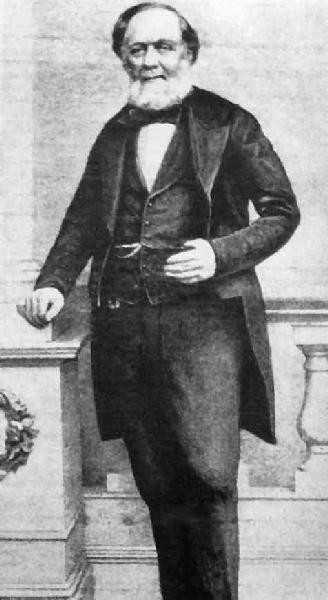
William Calcraft was born at Little Baddow, near Chelmsford, Essex, on the 11th of October 1800.
He holds the distinction of being the longest-serving executioner in British history, holding office continuously for forty-five years from 1829 to 1874.
While exact tallies vary across regional gaol registers, he carried out between 430 and 450 executions—including thirty-four women—of which at least 388 were conducted in public and 41 in private behind prison walls.
In his personal life, Calcraft was regarded as an affectionate family man who was devoted to his grandchildren and kept a menagerie of pets, with a particular fondness for breeding rabbits.
Originally a cobbler by trade, Calcraft also worked as a street hawker selling meat pies to the large crowds assembled outside Newgate Prison on hanging mornings.
While working outside the prison walls, he made the acquaintance of James Foxen, the official hangman for London and Middlesex.
Through Foxen’s influence, the civic authorities hired Calcraft on an ad-hoc basis to administer juvenile floggings in the Newgate exercise yards.
His initial experience on the scaffold occurred at Lincoln on 27 March 1829, when he executed burglar Thomas Lister at Lincoln Castle and highwayman George Wingfield at Lincoln’s Beastmarket on the same day.
Appointment as Official Executioner for London and Middlesex
Following James Foxen’s death on 14 February 1829, the Morning Post announced on 18 March that Calcraft had been selected to succeed him as the official executioner for the City of London and the County of Middlesex, entering office on 4 April 1829.
His inaugural hanging at Newgate took place on 13 April 1829, executing Ester Hibner for the starvation murder of a parish apprentice.
The year 1829 proved exceptionally busy under the harsh provisions of the Bloody Code, with Calcraft officiating at thirty-one executions across the capital, occasionally assisted by Thomas Cheshire.
Landmark Public Executions
Sarah Harriet Thomas at Bristol (1849)
On 20 April 1849, Calcraft, assisted by Staffordshire executioner George Smith, executed seventeen-year-old Sarah Harriet Thomas on the gatehouse roof of Bristol’s New Gaol for the bludgeoning murder of her employer.
The condemned girl’s youth, physical attractiveness, and desperate struggles on the roof visibly shook the executioner.
Calcraft later recalled that she was “one of the prettiest and most intellectual girls I have met with.”
Frederick and Maria Manning at Horsemonger Lane (1849)
On 13 November 1849, Calcraft executed Frederick George Manning and his wife Maria on the roof of Surrey’s Horsemonger Lane Gaol for the murder of Patrick O’Connor.
The rare spectacle of a husband and wife hanging side by side drew a crowd estimated between 30,000 and 50,000 onlookers, including novelist Charles Dickens, whose disgust at the ribald mob inspired his public campaign against public executions.
Invention of the Ankle Strap (1856)
During the execution of William Bousfield at Newgate on 31 March 1856, the condemned man convulsed violently and repeatedly swung his legs upward, managing to rest his feet on the wooden edge of the open trapdoor.
Calcraft and warders had to pull Bousfield down into the drop.
Following this ordeal, Calcraft introduced a leather ankle strap to bind the prisoner’s lower legs, a safeguard that became a permanent fixture of British hanging procedure until capital punishment was abolished.
The Final Public Hanging of a Woman at Newgate (1862)
On 20 October 1862, Calcraft hanged serial poisoner Catherine Wilson outside the Debtor’s Door of Newgate Prison before 20,000 spectators.
Wilson died with outward composure and without visible struggle, becoming the last woman ever executed in public outside Newgate.
The Manchester Martyrs (1867)
On 23 November 1867, Calcraft officiated at the public hanging of three Irish Republican Brotherhood members—William O’Meara Allen, Michael Larkin, and Michael O’Brien—outside Salford Prison for the fatal shooting of Police Sergeant Charles Brett.
The men entered Irish nationalist history as the “Manchester Martyrs.” Calcraft received a substantial fee of £30 for conducting the triple hanging.
The End of Public Executions in Great Britain
Calcraft officiated at the final two public hangings in British legal history:
- Frances Kidder: Executed outside Maidstone Prison on 2 April 1868 for the drowning of her stepdaughter—the last woman publicly hanged in the United Kingdom.
- Michael Barrett: A Fenian activist executed outside Newgate on 26 May 1868 for his role in the Clerkenwell Prison explosion, which claimed twelve lives. Barrett was the last person publicly executed in Great Britain.
Three days after Barrett’s death, Parliament enacted the Capital Punishment Amendment Act 1868, which ended public executions and required all future sentences of death to be carried out behind prison walls.
The Era of Private Executions
The inaugural private hanging behind closed doors occurred at Maidstone Prison on 13 August 1868, when Calcraft executed eighteen-year-old railway worker Thomas Wells for the murder of the Dover station master.
Although removed from the public street, representatives of the press and municipal magistrates attended, watching Wells take approximately two minutes to die under the short drop.
Calcraft’s final execution in London was that of John Godwin at Newgate on 25 May 1874.
His final career execution took place at Exeter on 10 August 1874, hanging John McDonald.
Technical Methods, Remuneration, and Innovations
Calcraft relied almost exclusively on the short drop, providing a fall of only two to three feet.
Because the short drop rarely fractured the cervical vertebrae, death occurred via slow mechanical strangulation, often requiring Calcraft to descend beneath the scaffold to pull on the prisoner’s legs or press upon their shoulders to shorten the struggle.
Under his London contract, Calcraft received a retainer of one guinea (£1.05) per week, an additional guinea for each Newgate hanging, and half a crown (12.5p) for administering floggings.
He supplemented his income with provincial commissions, where sheriffs paid up to £10 plus travel expenses per execution.
Between 1829 and 1870, he served as the regular hangman for Horsemonger Lane Gaol in Surrey, conducting twenty-six executions, and held an exclusive tenure at Maidstone Prison, where he carried out thirty-seven hangings between 1830 and 1872.
By custom, Calcraft claimed the clothes and personal effects of the condemned, frequently selling them to Madame Tussauds to dress figures in the Chamber of Horrors.
He also sold lengths of the execution rope to spectators and collectors for up to five shillings an inch, popularising the idiom “money for old rope.”
He pioneered the leather waist belt equipped with side wrist cuffs to secure the prisoner’s arms rapidly in the condemned cell.
A surviving example of his short hemp noose—used to execute Richard Pedder in August 1857—remains preserved at Lancaster Castle.
Expanding Reach via the Railways
Before the 1840s, executioners rarely travelled outside their immediate home counties due to the slow pace of stagecoaches.
With the rapid expansion of the British railway network in the mid-19th century, Calcraft travelled nationwide, accepting commissions in northern England, Wales, and Scotland.
He made two trips to Scotland:
- Glasgow (28 July 1865): Executed Dr. Edward William Pritchard at Jail Square before 100,000 spectators for the poisoning of his wife and mother-in-law;
- Perth (4 October 1870): Hanged George Chalmers at Perth Prison in Scotland’s first private execution.
In March 1873, he travelled to Durham Gaol to execute serial poisoner Mary Ann Cotton, assisted by Robert Evans Anderson.
Retirement, Death, and Legacy
Facing increasing criticism from prison doctors regarding the cruelty of prolonged short-drop strangulations, Calcraft retired in 1874 on a weekly pension of 25 shillings (£1.25) provided by the Corporation of the City of London.
He was succeeded on the Home Office circuit by William Marwood, who pioneered the scientific “long drop” calculated to dislocate the neck instantly.
Calcraft died at his home in Hoxton on 13 December 1879 at the age of seventy-nine, and was buried in Abney Park Cemetery in Stoke Newington, London.
While modern commentators frequently criticize Calcraft for bungling executions, his methods reflected the standard medical and mechanical practices of his era.
The long drop had not yet been codified in England, and Calcraft merely perpetuated the short-drop traditions handed down by his Georgian predecessors.
His long career marked the definitive transition of British capital punishment from raucous street spectacles to regulated, private executions, leaving a legacy later inherited by The Billingtons.
Frequently Asked Questions
Who was William Calcraft?
William Calcraft (1800–1879) was an English executioner from Essex who served as the official hangman for London and Middlesex from 1829 to 1874. He is the longest-serving executioner in British history, carrying out more than 430 hangings.
Why did William Calcraft use the short drop method?
Calcraft learned his trade in the 1820s when hangmen used a short drop of eighteen inches to two feet, which caused death through slow asphyxiation and carotid compression rather than spinal fracture. The scientific “long drop” was not adopted in England until William Marwood succeeded him in the 1870s.
What were the final public executions conducted by William Calcraft?
Calcraft officiated at the final two public hangings in Great Britain in 1868: Frances Kidder at Maidstone on 2 April (the last woman publicly hanged) and Michael Barrett at Newgate on 26 May (the last public hanging in Britain).
What was the origin of the phrase “money for old rope”?
By tradition, executioners claimed the clothes and physical apparatus of the condemned. Calcraft regularly cut up the execution ropes of notorious murderers and sold the strands to souvenir hunters for up to five shillings an inch, giving rise to the popular phrase.
What innovations did William Calcraft introduce to hanging?
Calcraft invented the leather waist-pinioning strap with attached wrist cuffs to immobilize the prisoner’s arms, and introduced the ankle strap to prevent condemned felons from kicking or catching their feet on the sides of the scaffold trapdoors.
Support the Archive
If you have found this article useful and would like to help preserve and maintain this historical archive, please consider supporting the site.
3 thoughts on “William Calcraft – One of Britain’s Most Prolific Hangmen”
Comments are closed.